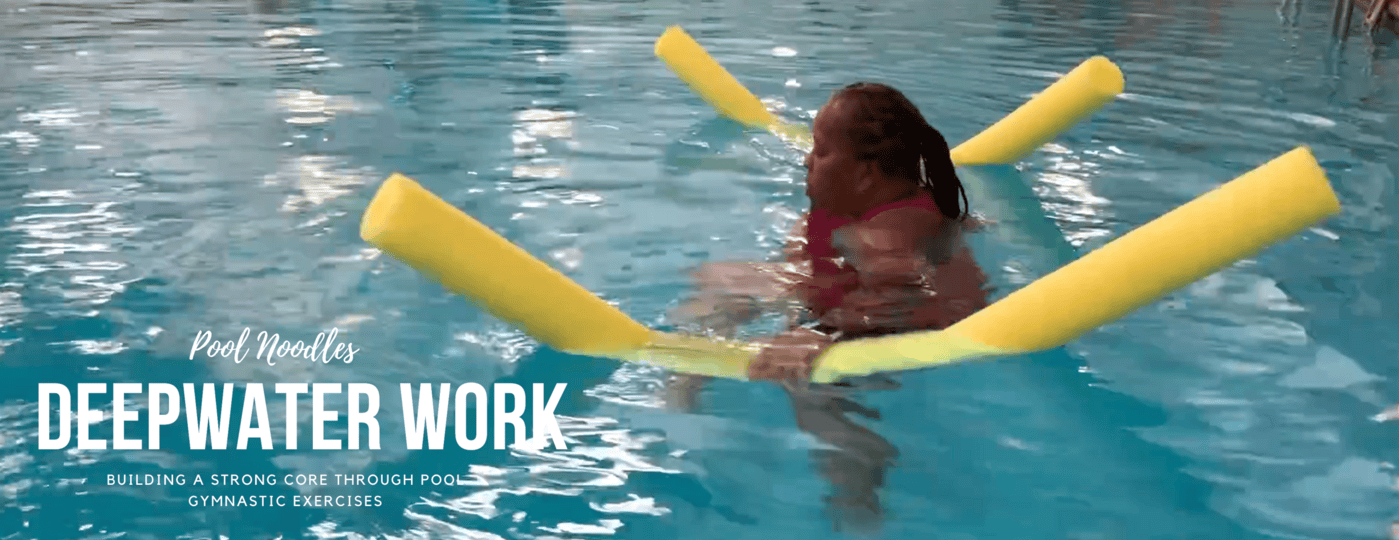
Have you ever felt the wonderful sensation of floating weightlessly in deep water? It's a unique environment that can offer surprising benefits for strengthening your core and torso in a gentle and supportive way. Let's explore how deepwater core exercises, often using a simple noodle, can help you find a new kind of strength, balance, and flexibility.
The Gentle Power of Deep Water for Your Core
When you're suspended in deep water where your feet don't touch the bottom, something amazing happens: gravity's pull on your body is significantly reduced. This "no-gravity" environment allows for movements that can be kinder to your joints while still effectively engaging your core and torso muscles.
Think of your core as the foundation of your movement. In deep water, without the need to constantly fight gravity to stay upright, your core muscles have to work in a different way – to stabilize you and control your movements in all directions. This can lead to a deeper and more balanced engagement of these important muscles.
Bridging Balance, Strength, and Flexibility in Deep Water
Deepwater core exercises often naturally blend balance, strength, and flexibility.
Balance:
Simply staying afloat in deep water requires constant, subtle adjustments from your core muscles. Adding the gentle instability of a noodle enhances this balance challenge in a safe way.
Strength:
The water provides resistance to your movements in all directions. When you push or pull against this resistance with your core and torso, you're gently building strength.
Flexibility:
The weightless environment can allow for a greater range of motion in your torso and hips, making gentle stretching and twisting movements feel more accessible.
The Benefit of No Gravity
As mentioned, the reduced effect of gravity in deep water is a game-changer. It means:
Less stress on joints:
If you have knee, hip, back, or shoulder injuries, deep water can provide a supportive environment where you can exercise your core without the same impact you'd experience.
Increased range of motion:
The buoyancy can assist with gentle stretching and movements that might feel restricted on land.
A unique way to build strength:
Your muscles work against the water's resistance in all directions, leading to a well-rounded strengthening effect.
How Deep Does the Water Need to Be?
For effective deepwater core exercises, the water needs to be deep enough that your feet don't touch the bottom when you're in an upright position. This allows you to fully experience the buoyancy and engage your core for stabilization. The exact depth will depend on your height, but generally, water that's over your head is considered deep water for these types of exercises.
What If You Have Injuries or Water Concerns?
It's completely understandable to have concerns if you're dealing with injuries or if you're not comfortable in deeper water.
Injuries:
Deep water can often be a very forgiving environment for injuries due to the reduced impact. However, it's crucial to work with a physical therapist or an aquatic fitness professional who can tailor exercises to your specific needs and limitations. They can show you modifications and ensure you're moving safely.
Water Depth Concerns:
If the idea of water deeper than 3 feet makes you nervous, that's okay! You can still experience some of the benefits of aquatic exercise in shallower water. As you become more comfortable in the water, you might gradually venture into slightly deeper areas. Starting with a flotation device like a noodle can also help you feel more secure. Look for classes or instructors who specialize in working with individuals who have water anxieties.
What Major Muscle Groups Get Worked in Deep Water?
Deepwater core exercises engage a wide range of important muscle groups.
Abdominals (Rectus Abdominis, Obliques, Transverse Abdominis):
These are your primary core muscles responsible for stability, rotation, and flexion of your torso.
Back Muscles (Erector Spinae, Multifidus):
These muscles help support your spine and control movement.
Hip Flexors:
These muscles help lift your legs and contribute to core stability.
Shoulder Muscles (Deltoids, Rotator Cuff):
These muscles work to stabilize your upper body and assist with movements in the water.
Why is Noodle Work So Valuable in Deep Water?
A simple pool noodle becomes a versatile tool in deepwater core exercises because:
Buoyancy Assistance and Challenge:
It can provide gentle support to help you stay afloat, allowing you to focus on core engagement. It can also be used to create instability, challenging your core to work harder to maintain balance.
Resistance:
Pushing and pulling the noodle through the water provides gentle resistance for your core and torso muscles.
Versatility:
Noodles can be used in various ways for different exercises, from gentle twists and rotations to more dynamic movements.
Accessibility:
They are inexpensive and readily available at most pools.
Finding Your Strength in the Deep
Exploring deepwater core exercises can be a surprisingly gentle yet effective way to build strength, improve balance, and enhance flexibility, all while being kind to your joints. If you're curious about a new way to engage your core and enjoy the unique sensation of weightlessness, consider giving it a try. Remember to start slowly, listen to your body, and don't hesitate to seek guidance from a qualified professional, especially if you have any injuries or concerns about deeper water.
You might also find our post on aquatic balance training helpful as you explore
movement in the water.. What's one gentle way you might consider exploring the power of deep water for your core today?



Comments